Thank you!
Oops! Something went wrong while submitting the form.
Cancel

.png)
The most powerful strategy in games is the one the industry most avoids

My favorite people in the games industry are often the ones I might otherwise avoid in life. The best developers I know are incorrigible snobs, especially about other developers and their games. They are often deeply, confidently weird.
Most of the industry is the opposite. Most new game pitches are framed in relation to something that already exists: "It's like Fortnite but more realistic." Investors ask how big the market is. At $200M per game, that logic pushes everyone toward proven categories and familiar mechanics. The result is an industry where most games look the same. And even the copies usually fail, because quests are hard to write, gunplay is hard to tune, and big-budget resources flow toward what is easiest to measure: graphics, sound, and other "production values." A large number of games that may look polished and familiar, but simply aren't that much fun to play.
Very few games are both Fun and Different. That’s where the money is.
Graphing these ideas makes the point stark.
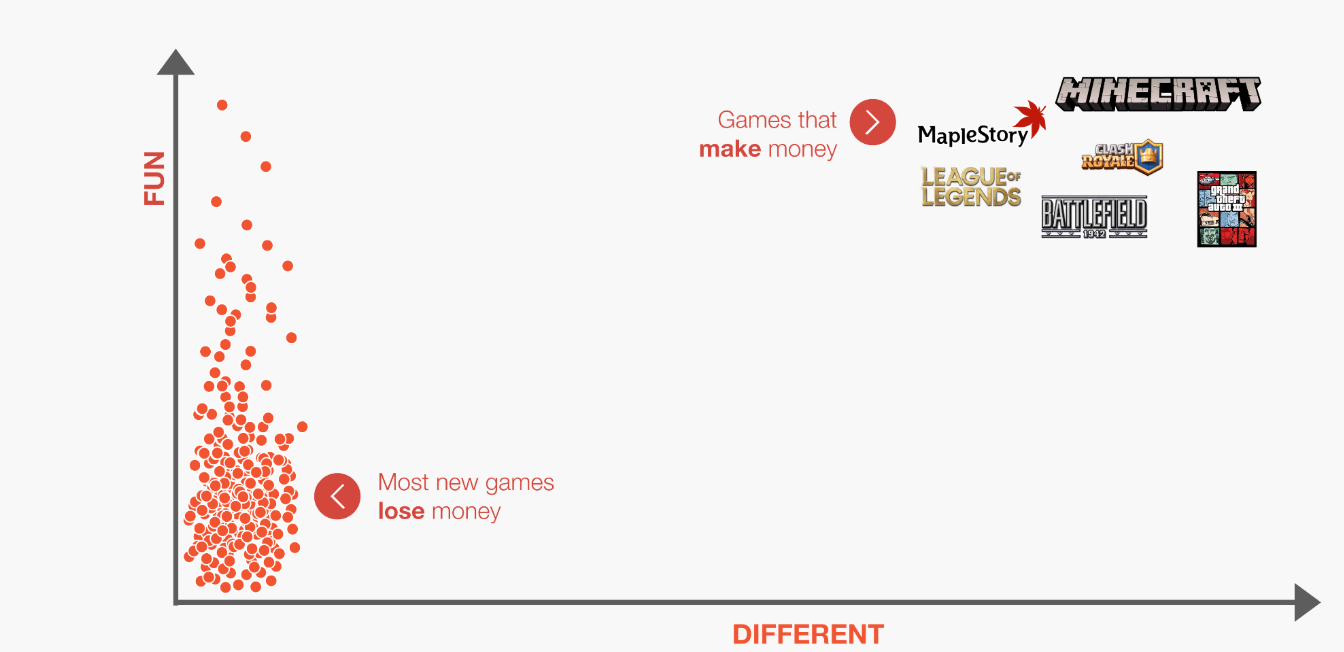
The upper right corner of the graphic is the realm of the Breakout Hit. It is where most of the money in our industry is made. The lower left corner is where most of the money is lost, the sea of sequels and copycats that may have high revenue but almost always have low or negative Returns on Investment.
So, you would think that big game companies would drop whatever else they are doing and study this phenomenon like a scientist who has just unlocked alchemy to create gold. Instead, our industry largely shrugs off those breakout hits and says “well it’s a hits-driven business,” and continues to put out games in the lower left quadrant. What a strange situation: all the money is in the upper right and most major publishers’ output is in the lower left. These publishers are not only making bad art, they are making bad business.
At $200M per game, copycat behavior seems rational: you are trying to avoid disaster. You don't ask what might be great, you ask how big the market is and whether you can capture 10% of it. That logic constrains a developer’s creative choices and locks them into established genres. Over time, the industry’s games start to all look the same.
This isn't growth-generating innovation, it's cargo-culting. Like Pacific islanders after WW2 building bamboo control towers and landing strips hoping to summon airdrops from the sky, these publishers think the "best practices" for making a AAA live services hit will work, and are baffled when they don't. The landing strips are loot boxes, battle passes, seasonal roadmaps, and 'live service' infrastructure: the visible outputs of a successful game, bolted onto a game that isn't fun enough to sustain them.
The dirty secret about differentiation, like all innovation, is that it is extremely uncomfortable. We humans are creatures of evolution. Until very recently, going off-the-beaten-path could mean getting eaten by a tiger. Today in the game industry we sit in offices with chairs but our brains are wired similarly, attuned to danger all around. Seeing past that danger doesn’t come easy.
Resistance to ideas outside accepted industry norms comes from all corners, in many guises. Marketing specialists will say that there is no market for a World War 1 game, as they did when the idea of Battlefield 1 was originally pitched. Or equity analysts will say that high fidelity graphics and mobile games are what matter for success, as they said for decades about Nintendo’s low-fi graphics on a specialized handheld device. By being different you are being deeply threatening to their idea of how the world works and their investment into that worldview. Accepting innovation requires them to internalize that a piece of their old world is dying.
Their resistance is usually presented in a reasonable-sounding package: “This is what’s popular now.” “Let’s not question what we know works.” “Of course that’s how it’s done.” This is one reason why CEOs who accomplish real innovation get reputations for being combative. They have to break down the wall of resistance.
Differentiation in games is a choice. Most of the industry chooses to be a commodity, even though games are one of the few categories where true differentiation is not only possible, but expected. Many companies frame the issue of intense competition as a marketing problem, but what they really have is a product problem. It's expensive to stand out if you look like everything else.
And unlike shampoo or ball bearings, the games business has high costs of production: expensive offices and high-cost development talent. Commodity returns with a non-commodity cost structure is an excellent way to lose money. Games have an infinite number of ways to innovate and differentiate. With a truly unique product you get the market to yourself. You get a monopoly.
Enough that you are being laughed at. If reasonable-sounding people mock your idea, you might be on to something. Taking abuse doesn’t guarantee success. But it makes getting attention much easier.
Deep differentiation often hides under something that looks familiar. When we were acquiring DICE at EA, I was pulled into two meetings where executives demanded to know why we were buying “another World War II FPS.” On the surface Battlefield looked like Medal of Honor. Underneath, the gameplay was completely different.
Nexon’s then CTO (now co-CEO of Nexon Korea), Daehyun Kang had a great line at one of our executive offsites: “Everything we did that worked out really well felt extremely geeky at the start, to the point of deep embarrassment.”
But being different is not enough. There is a huge difference between genuine innovation and self-expression that has meaning only for the creator. The games industry is full of ambitious, original projects that nobody played — not because they lacked vision, but because they weren't fun. Differentiation by itself is just expensive self-indulgence. In games, fun is the measure of quality, whether it’s Risk, tennis, or Starcraft.
A useful heuristic is whether people like to talk about what they did in a game. The clever way they invaded a neighboring country in Civilization. The time they drove full speed into 8-Ball’s in GTA to shake five stars. I recently sat at a table of game execs at GDC where we were invited to discuss technology trends, and instead everyone traded stories about the crazy, creative moments they had in PUBG and ARC Raiders.
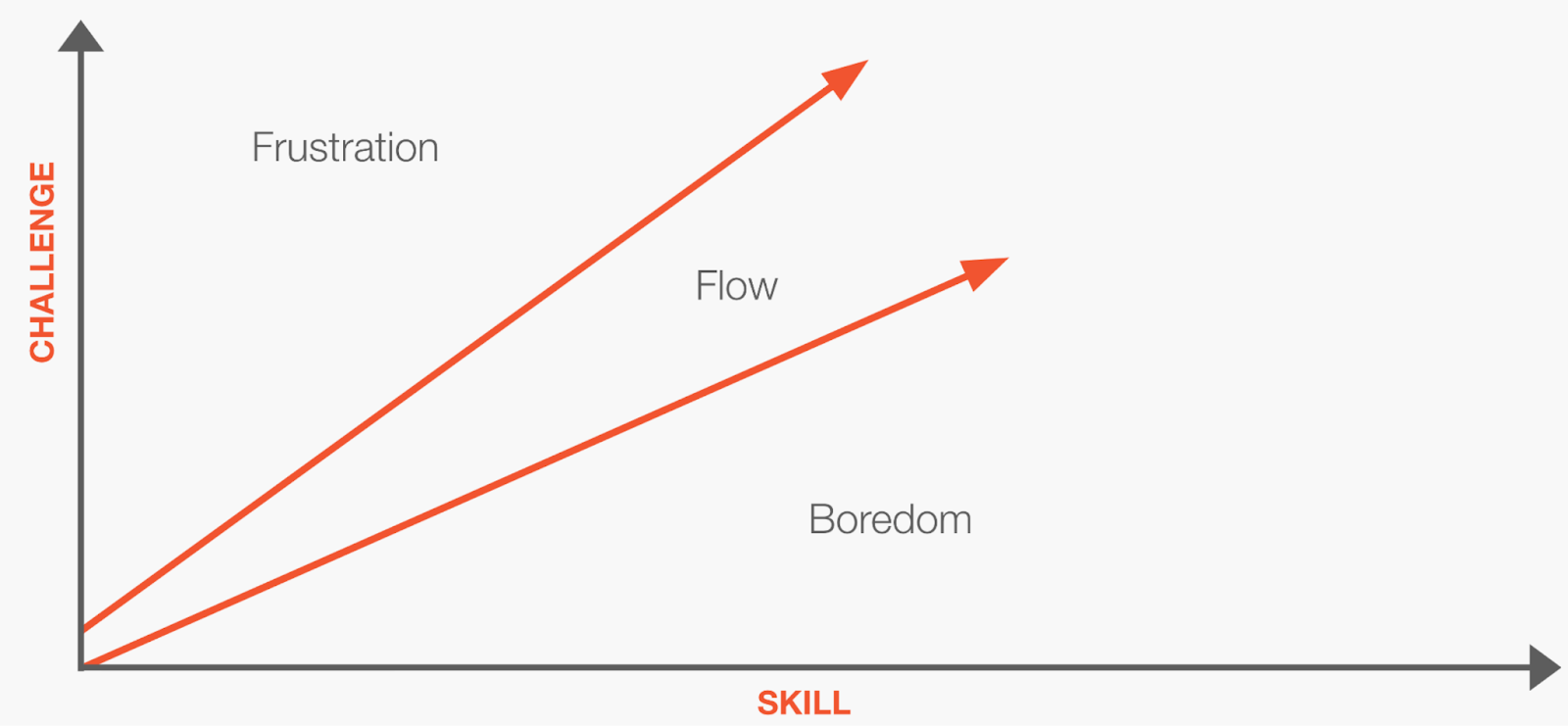
There is good science behind this. Mihaly Csikszentmihalyi called it “flow”, the state where challenge and ability are in balance. Too much challenge creates frustration. Too little creates boredom. Imagine a tennis game with a net 50 feet high and a court 50 feet wide. The right balance creates deep engagement. Game designers, at their core, are hackers of flow.
Embark put this focus on fun at the core of their iteration process. The team was obsessed with gameplay above all else – balancing the player’s skill against the game’s challenge – and tested it constantly. I could show up to the daily 10:00 AM playtests and feel immediately whether it was working, zeroing on the fun signal within the noise.
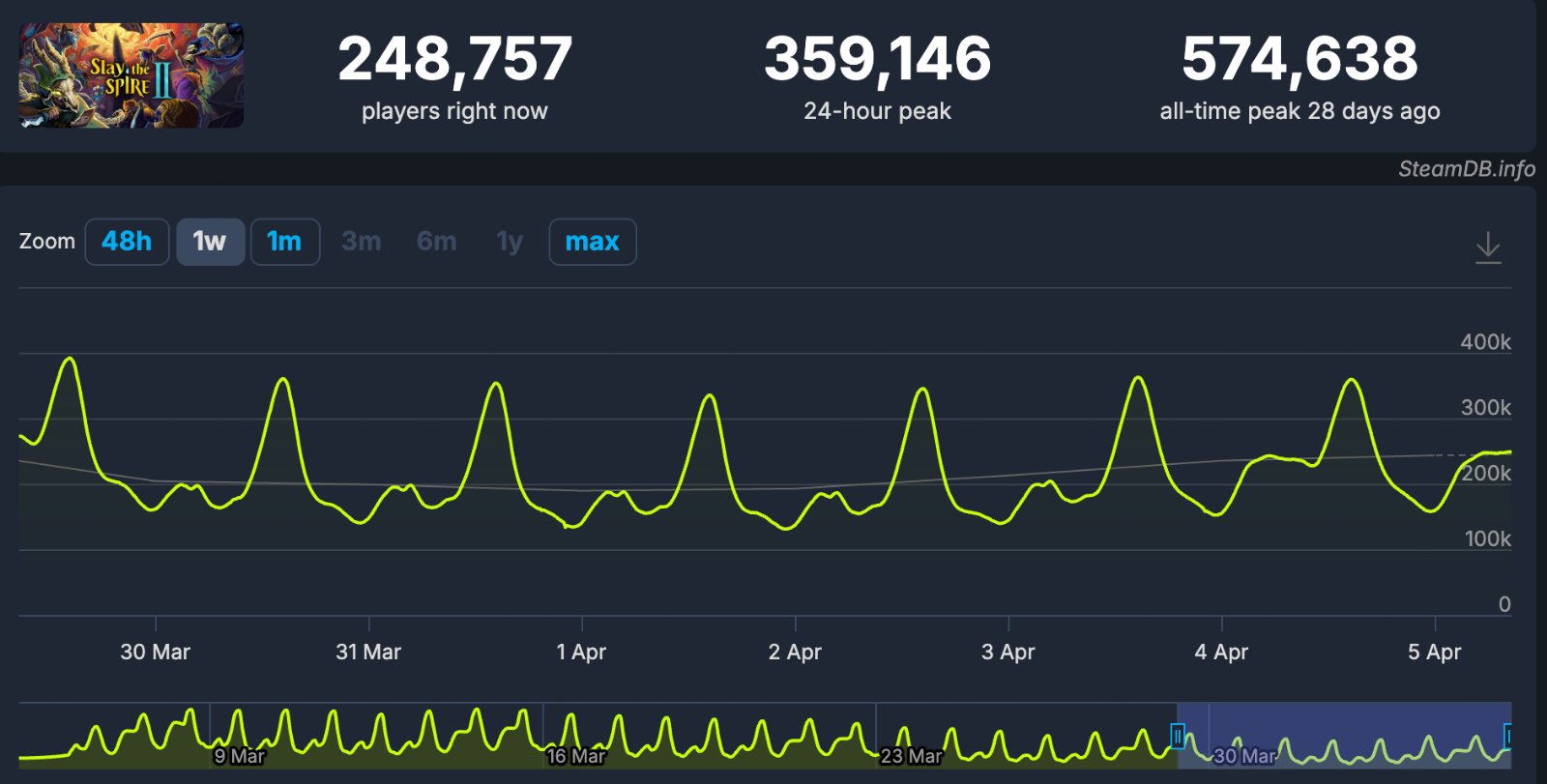
As I write this, Slay the Spire 2 — a card battle game with no famous actors, no cinematic graphics, and no IP licensing — has more concurrent players on Steam than almost anything else in the industry.
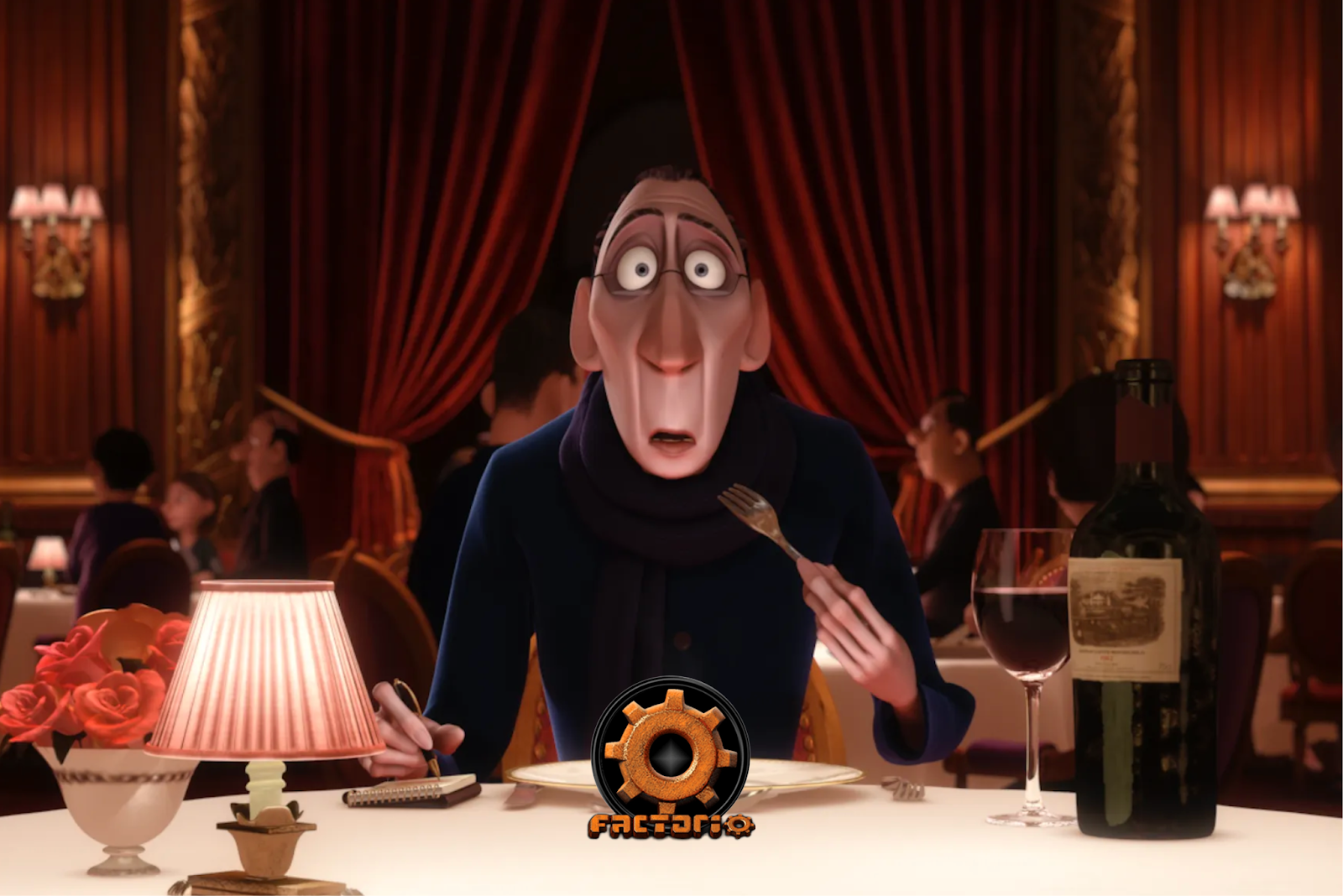
This should be obvious, like saying food should taste good. But does the industry act as if fun is the most important thing? Look at any major awards show. Few stop to say ‘this game is fun.’ Often it feels like we talk about everything but fun: the spectacle, the IP, the cinematic graphics and sound, the famous actor who did the voice work. These are the artifacts of success, not the causes of it. Imagine the yawns at any of the major award shows if Minecraft, Factorio, or Slay the Spire launched in such a venue.
To figure out if I’m on the right track, I ask myself — or the team I’m with — ‘Why should I give a fuck about your stupid game?’ It’s shorthand for a brutal reality: from the moment someone wakes up to the time they go to bed, a thousand things are competing for their attention. Unless your game is doing something meaningfully different and fun, it won’t matter.
Lore is of course at the core of a game like Skyrim. Graphics and story are the center of God of War. These are important aspects of a game. But they are not the game.
GAME STRANDING
Death Stranding is one of the most beautiful games ever made. Massive environments, extraordinary acting, a haunting soundtrack. It is also a game many players admire more than they enjoy.
This is worth understanding, because Hideo Kojima is one of the purest hippie snobs in our industry: deeply, confidently weird, uninterested in copying anyone. He is exactly the kind of developer who can produce breakout hits.
And parts of Death Stranding are genuinely brilliant. The traversal system, the asynchronous cooperation, the strand mechanics. It is unlike anything else.
But the creative energy doesn't stay there. It migrates toward the cinematic layer: the actors, the cutscenes, the spectacle. The result is a game that is easier to admire than to play. The weirdness goes to the presentation when it should stay in the play.
This is the trap for every ambitious developer, and it can be as dangerous as copying. Copying drops you into a red ocean of established competition. Misdirected taste drops you into no ocean at all. The industry is full of beautiful games nobody plays. Snobbery's highest and best value is when it's directed at fun.
Most of the industry understands this. They play the same breakout hits. They got into the industry to make games like that. And then they ignore it.
Building something truly different and fun feels prohibitively risky. It’s hard to explain. It’s easy to criticize. It feels structurally incompatible with every industry incentive. So they choose what is easier to defend: familiar mechanics, proven genres, incremental change.
This is a choice. You can build something genuinely different and fun, accept the risk and the ridicule, and take the upside. Or you can build something that looks like everything else, explain it cleanly, and compete for the leftovers. Most of the industry has already decided.
The kinds of hippie snobs we’re talking about don’t usually last at big publishers. Most of those companies are constitutionally incapable of supporting them. Their incentives reward predictability over originality, which is why they systematically miss the games that drive returns. If you want exposure to those returns, you have to back the kinds of teams the big publishers are built to reject.
This is a problem for investors. Obsession with near-term operating income -- embedded in standard exec comp -- attracts hot money, not durable value. Breakout hits are what drive long-term returns. If a management team cannot articulate how they build and grow such games, you should dump the stock.
How do you know if a management team is serious about this? They won’t be polished. They won’t have a good PowerPoint to analyze TAMs, genres or formulas for success, even though they know investors like those things. They will have unconventional views of the biggest fads of the day and won’t care if you disagree. They will strike you as a little weird, a little off. They will make you uncomfortable, as if they are sizing up you and everyone else in the room. They are not trying to impress you. They are evaluating you. Often more than you are evaluating them.
They will talk about holes in the market, blue oceans, and things nobody else is doing that are cool. They will talk about risk not as variability of returns, but as failing to seize opportunities to make products that matter. They will tell you how they can deliver this without spending truckloads of money. They will be exceedingly choosy about M&A. They may strike you as bizarrely playful.
You might be exhausted at the end of such a discussion, but you should recognize them as kindred spirits. The hippie-snobs who direct that instinct toward fun are identifying arbitrage. Exploiting it may be the only way to get Alpha in the games industry.
Great developers are of a similar mind as their customers: deeply snobby about games, often disappointed by what the industry produces, and highly judgmental about the people who make them. They have to be; only someone who really cares about great games can make one.
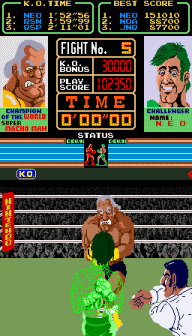
One of the most delightful embodiments of these concepts is Nintendo, a company beloved by millions precisely because they go their own way and they do it with such style. At EA in the early 2000’s I got to tag along on several executive trips to meet Iwata-san and Miyamoto-san, who at the time were newly promoted to lead what became one of the most difficult and ultimately brilliant turn-arounds in corporate history.
Their meetings were not about slides and pleasantries, they were hands-on builders. Miyamoto handed us a prototype of the motion-sensor "nung-chuck" Wii controllers and loaded up a modified Punch-Out, the great game Iwata had produced decades earlier. He joked that he chose it because Iwata-san would be more likely to support the strange new controller.
They wanted our reactions, and they wanted to debate with us and with each other whether their new products were fun enough. These meetings were intellectually challenging, and they were enormously playful.
Nintendo’s revival was built on being different and fun. The DS and the Wii – which later became monster successes – were nowhere near as powerful as the PlayStation, PSP, Xbox, or a typical game PC.
After becoming Nexon’s CEO in 2014 I reconnected with them, ostensibly to talk about collaboration but really because I wanted to learn from my heroes. They were incredibly gracious, patient, and generous with their time. About a year after our first meeting we met again, this time talking more conceptually about the industry and the nature of innovation. As we sipped green tea in Iwata-san’s large, minimalist office, I told him my thought that the best games – the breakout hits – are both very fun and very different, and described the X-Y graphic above.
He paused and smiled and said: “Your graphic is missing one axis. The Z-axis needs to be about addressing a big audience.” He explained that great musicians don’t want an audience of a few people in a tiny restaurant, they are making art to self-express. They want to play to a packed house.
On the train back to Tokyo I felt embarrassed that I missed something so obvious. Iwata-san’s Z-axis captured the many ways our industry talks about appealing to large audiences. The IP licensing, the graphics, the famous actors are all ways the games industry tries for mass appeal. Nintendo built a colossus in the most simple and direct way: just make a game you and your friends want to play.